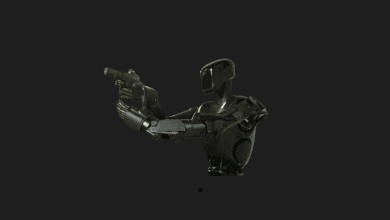
China Takes the Lead in Humanoid Mass Production: Agibot Hits the 10,000 Mark

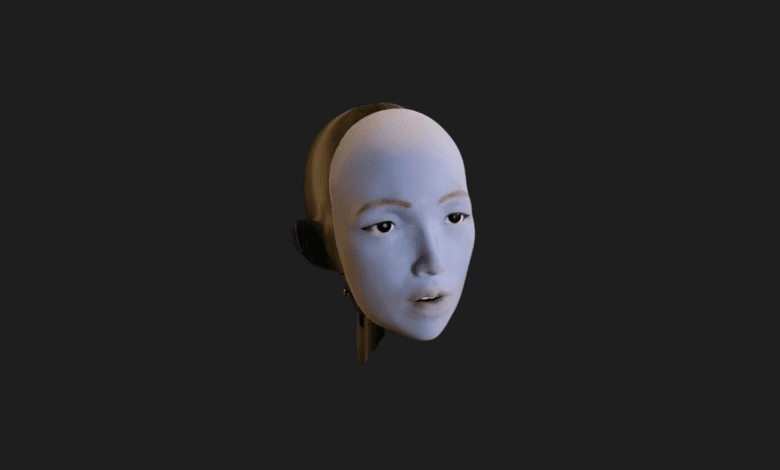

I clearly remember watching science fiction movies a decade ago, thinking that humanoid robots walking among us, carrying boxes, and working in factories was a reality reserved for the distant future. I certainly did not expect the transition from lab prototypes to assembly-line mass production to happen quite this fast.
If you have been following the artificial intelligence and robotics space, you know that the convergence of these two technologies has completely shattered our timeline expectations. While many Western companies are still refining their high-profile prototypes and releasing heavily edited video demonstrations, Chinese manufacturers are taking a radically different approach: they are aggressively scaling up manufacturing.
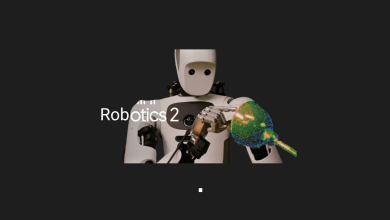
This week, I came across a massive milestone that perfectly illustrates this shift. AGIBOT, the Chinese robotics company that turned heads at the CES trade show earlier this year with their highly agile Agibot A2, officially announced that they have produced their 10,000th humanoid robot.
I want to take a deep dive into what this number actually means for the industry, because reaching the 10,000 mark is not just a vanity metric. It signals a fundamental transition in how we are going to live and work alongside machines.
The Exponential Math of Mass Production

When I was looking at the production data released by AGIBOT, the actual timeline of their manufacturing scaling blew my mind. It is a classic example of an exponential curve, and it explains exactly why the robotics landscape is changing so rapidly.
Let’s break down the production timeline:
- The First 1,000 Units: It took the company roughly two full years to build their first thousand robots. This makes sense; early-stage hardware is notoriously difficult, requiring custom parts, manual assembly, and constant redesigns.
- 1,000 to 5,000 Units: This next phase took exactly one year. They ironed out the major kinks and started treating the robots less like bespoke engineering projects and more like commercial electronics.
- 5,000 to 10,000 Units: This is the jaw-dropping part. It took them only three months to produce the last 5,000 units.
That is more than a 4x increase in production speed in the final phase. According to Agibot’s CTO, Peng Zhihui, this acceleration is the direct result of massive improvements in their supply chain, the strict standardization of their manufacturing processes, and highly coordinated assembly systems.
To me, hardware has always been the hardest part of the tech industry. Software can be updated overnight, but building physical actuators, synthetic frames, and complex sensory arrays at scale takes immense physical infrastructure. The fact that processes that used to take years are now being completed in months shows that the Chinese robotics industry has successfully cracked the code of humanoid mass production.
Crossing the Commercial Threshold: Beyond the Lab

For a long time, humanoid robots were basically very expensive research tools. You would see them doing backflips in a controlled lab environment or carefully walking across a stage, but they weren’t actually doing anything economically valuable.
AGIBOT’s recent milestone proves that we have officially crossed the threshold from niche R&D projects into scalable, commercial reality. These 10,000 robots are not sitting in a warehouse gathering dust; a significant portion of them are already deployed and actively working.
Instead of forcing the robot to master one highly specific task, AGIBOT has designed a general-purpose platform that is currently taking on a variety of roles:
- Logistics and Warehousing: They are navigating dynamic warehouse environments, moving boxes, organizing inventory, and handling the repetitive lifting tasks that often lead to human injury.
- Retail and Showrooms: Interestingly, these robots are also being deployed in customer-facing retail environments. Because of their humanoid form factor, they can interact with the physical world exactly as a human employee would—navigating standard aisles and reaching for standard shelves.
- Direct Manufacturing Lines: Some units have been integrated directly into industrial manufacturing processes, working alongside human technicians to assemble other products.
I find it fascinating that the humanoid form, which many engineers previously criticized as inefficient compared to specialized robotic arms or wheeled drones, is proving its worth. The world is built for humans. Stairs, doors, tools, and workspaces are all designed for our bodies. By building a robot that mirrors our shape, companies like AGIBOT avoid the need to redesign the entire physical workspace to accommodate the machine.
The Global Data Flywheel

While the hardware scaling is impressive, the software implication of having 10,000 robots in the wild is what really caught my attention.
In the world of artificial intelligence, data is everything. A robot trained purely in a simulation will always struggle with the chaotic, unpredictable nature of the real world. By deploying thousands of robots globally, AGIBOT is creating an incredibly powerful data flywheel.
- Real-World Edge Cases: Every time an Agibot encounters a weird lighting condition in a warehouse, a slippery floor in a retail store, or an awkwardly shaped box, it registers that data.
- Continuous Improvement: This physical data is fed back into their AI models. The software learns from these real-world mistakes and edge cases, pushing updates back to the entire fleet.
- Compounding Capability: Because there are thousands of units constantly feeding data back to the central system, the robots become more capable, more reliable, and safer at an accelerated rate.
This means that the 10,000th robot coming off the line today is fundamentally smarter and more adaptable out-of-the-box than the 1,000th robot was when it was built.
A Geopolitical Robotics Race
It is also crucial to note that AGIBOT is not confining itself to the domestic Chinese market. When researching their deployment strategy, I noticed they are aggressively expanding globally. They already have units operating across Europe, North America, Japan, South Korea, Southeast Asia, and the Middle East.
I honestly think we are witnessing a repeat of what happened with the electric vehicle (EV) and drone markets. While Western companies focus heavily on creating the absolute perfect, highly advanced prototype, Chinese companies are rapidly iterating, driving down the cost curve, and flooding the global market with “good enough” hardware that improves rapidly over time.
If Western competitors want to keep up, they will need to figure out how to transition from making dozens of incredible lab robots to thousands of reliable commercial units, and they need to figure it out quickly.
As I wrap up my thoughts on this, I cannot help but think about what the workplace will look like in just two or three years. With production timelines shrinking from years to months, a fleet of 100,000 active humanoid robots feels inevitable in the near future.
I have to ask: If your company suddenly deployed a few humanoid robots to handle the repetitive, physical tasks in your workspace tomorrow, would you feel relieved to have the help, or would you feel slightly uneasy about your new mechanical colleagues? Let me know your thoughts down below!
You Might Also Like;